Minimum Cost to Merge Stones
There are n piles of stones arranged in a row.
There are n piles of stones arranged in a row. The ith pile has stones[i] stones.
A move consists of merging exactly k consecutive piles into one pile, and the cost of this move is equal to the total number of stones in these k piles.
Return the minimum cost to merge all piles of stones into one pile. If it is impossible, return -1.
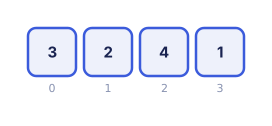
Example 1
Input: stones = [3,2,4,1], k = 2
Output: 20
Explanation: We start with [3, 2, 4, 1]. We merge [3, 2] for a cost of 5, and we are left with [5, 4, 1]. We merge [4, 1] for a cost of 5, and we are left with [5, 5]. We merge [5, 5] for a cost of 10, and we are left with [10]. The total cost was 20, and this is the minimum possible.
Example 2
Input: stones = [3,2,4,1], k = 3
Output: -1
Explanation: After any merge operation, there are 2 piles left, and we can't merge anymore. So the task is impossible.
Example 3
Input: stones = [3,5,1,2,6], k = 3
Output: 25
Explanation: We start with [3, 5, 1, 2, 6]. We merge [5, 1, 2] for a cost of 8, and we are left with [3, 8, 6]. We merge [3, 8, 6] for a cost of 17, and we are left with [17]. The total cost was 25, and this is the minimum possible.
Constraints
- n == stones.length
- 1 <= n <= 30
- 1 <= stones[i] <= 100
- 2 <= k <= 30
Hints
No hints yet.
Companies
No companies reported yet.
Discussion
Sign in to join the discussion.
Loading discussion...
Test results
No test cases yet.