UTF-8 Validation
Given an integer array data representing the data, return whether it is a valid UTF-8 encoding (i.e.
Given an integer array data representing the data, return whether it is a valid UTF-8 encoding (i.e. it translates to a sequence of valid UTF-8 encoded characters).
A character in UTF8 can be from 1 to 4 bytes long, subjected to the following rules:
This is how the UTF-8 encoding would work:
x denotes a bit in the binary form of a byte that may be either 0 or 1.
Note: The input is an array of integers. Only the least significant 8 bits of each integer is used to store the data. This means each integer represents only 1 byte of data.
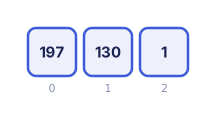
Example 1
Input: data = [197,130,1]
Output: true
Explanation: data represents the octet sequence: 11000101 10000010 00000001. It is a valid utf-8 encoding for a 2-bytes character followed by a 1-byte character.
Example 2
Input: data = [235,140,4]
Output: false
Explanation: data represented the octet sequence: 11101011 10001100 00000100. The first 3 bits are all one's and the 4th bit is 0 means it is a 3-bytes character. The next byte is a continuation byte which starts with 10 and that's correct. But the second continuation byte does not start with 10, so it is invalid.
Constraints
- 1 <= data.length <= 2 * 10^4
- 0 <= data[i] <= 255
Hints
Companies
No companies reported yet.
Discussion
Sign in to join the discussion.
Loading discussion...
Test results
No test cases yet.